India constituted AIGEG on April 13, 2026 and customer support is named as an active deployment sector — meaning sectoral disclosure rules are coming. Most Indian SMEs have neither the routing system nor the audit trail those rules will demand.
On April 13, 2026, MeitY notified the constitution of the AI Governance and Economic Group — AIGEG — chaired by Ashwini Vaishnaw, with Jitin Prasada as vice chair. The mandate, verbatim from the official briefing reported by TechObserver, is to "study which job profiles face the highest risk of automation and prepare transition plans for affected workers" and to "examine geographical concentration of these impacts." The same briefing names the sectors AIGEG considers active deployment zones for AI: "banking, healthcare, customer service and legal research."
Customer service is on that list. Not "future scenario." Active deployment.
If you run a 10-50 person D2C brand or services business in India and your support function is a WhatsApp number, a Gmail inbox, and three agents on a shared Freshdesk login, AIGEG has just told you something specific about the next 18 months. They will publish a sectoral classification — deploy, pilot, or defer — and somewhere downstream of that classification will be disclosure and audit-trail expectations. Today you can't tell me which tickets your team handled vs. which got an auto-reply. That gap is what AIGEG is going to ask about.
The Numbers Behind Why Customer Support Got Listed First
NITI Aayog's "Roadmap for Job Creation in the AI Economy," published October 2025 and co-authored with NASSCOM and BCG, is the document that put hard numbers behind AIGEG's framing. It pegs India's customer experience workforce at 2.0 to 2.5 million today and projects two scenarios for 2031: a worst case of 1.8 million and a best case of 3.1 million. The same report puts tech services at 7.5-8M today, 6M worst case, 10M best case by 2031.
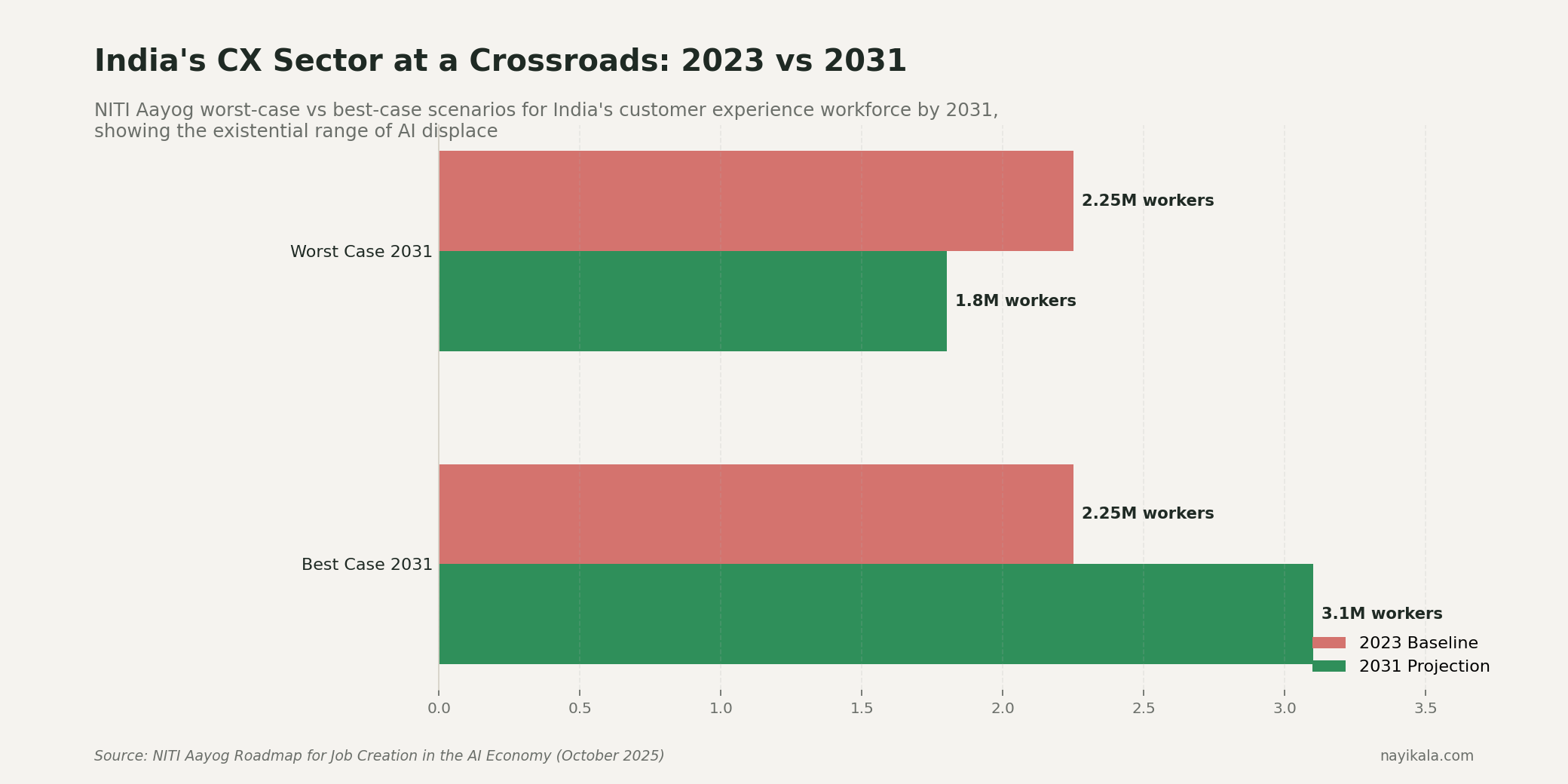
BVR Subrahmanyam, CEO of NITI Aayog, framed it in the foreword: "With over 9 million technology and customer experience professionals… we have both the scale and the ambition to become the AI workforce capital of the world." Debjani Ghosh, Distinguished Fellow at NITI Aayog, was sharper: "By 2031, India's technology sector stands at a crossroads: we could lose 1.5 million jobs or create up to 4 million new opportunities."
Read those two numbers next to each other. The 1.3 million-job swing on CX alone is what AIGEG is trying to govern. NASSCOM Chairman Rajesh Nambiar (CEO Cognizant India) put it more bluntly in March 2024: "BPO roles focused on repetitive processes could quickly become automated by AI." Per Gulf News reporting, AI agents are already handling 70-95% of customer queries at leading deployers, and companies report the ability to reduce BPO staffing by up to 80%.
This isn't a forecast. It's already happening. AIGEG is the policy body catching up.
What "Routing Done Right" Actually Looks Like — Two Indian Reference Points
Two case studies, both Indian, both verifiable, sit at the opposite end of the spectrum from "let's plug a chatbot into our website."
Nykaa + Verloop.io. First 30 days of deployment: ~1.6 million unique conversations handled by the bot. 90%+ of customers rated the experience "highly favourable or excellent." The bot's scope wasn't a vague FAQ widget — it covered cancellations, returns, shipping, replacements, refunds, and payment issues. Per Verloop's case study and YourStory's coverage, Nykaa was Verloop's first client.
Jio + Haptik. 5 billion notifications, 34 million conversations, 10 lakh+ transactions through the WhatsApp assistant. 25 million proactive messages a day and 8,000 new Jio Fiber/5G customers acquired daily through WhatsApp alone. The bot maps 900+ unique intents and 7,000+ phrasing variations. Source: Haptik's Jio Digital Life case study.
Now hold those numbers next to Klarna. Per Klarna's own February 27, 2024 press release, their OpenAI-built assistant handled 2.3 million conversations in its first month, equal to the workload of 700 FTE. Resolution time fell from 11 minutes to under 2 minutes. Repeat inquiries down 25%. They credited the system with a $40 million profit improvement in 2024. Then, as DigitalApplied documented in early 2026, Klarna started rehiring human agents because complex-interaction CSAT cratered under pure AI routing.
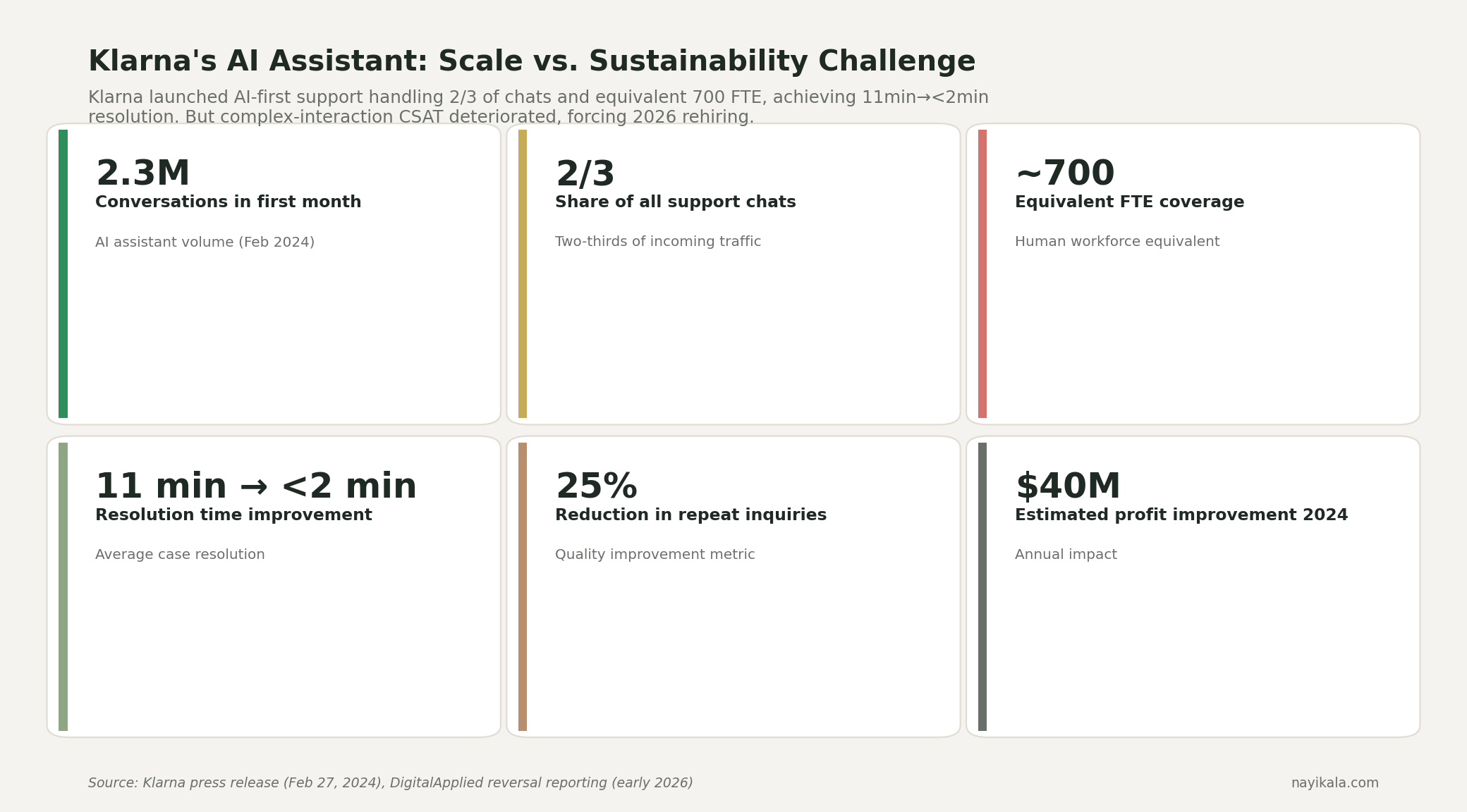
Klarna didn't fail at AI. They failed at routing. They had no defensible escalation path, no clean handoff, and — this is the AIGEG-shaped problem — no per-ticket audit of which conversations the AI resolved confidently versus which it should have escalated. Pure AI routing without a human path fails twice: customers churn, and you can't show a regulator what happened.
The Stack a 20-Agent Indian SME Actually Buys
Here's where the choices live. Pricing is per-month, annual billing, for a 20-seat team.
| Stack | Monthly cost | Where it fits |
|---|---|---|
| Zoho Desk Professional | ~$460 | Cheapest commercial option; deep Zoho ecosystem lock-in |
| Freshdesk Pro + Freddy AI | ~$1,100 | Strongest native AI; Indian-built; per-Freshworks Q4 FY25 disclosures, 75K+ paying customers |
| Chatwoot Premium (self-hosted) | ~$380 + ~$50 server | Bengaluru-built, MIT-licensed, 22K GitHub stars; Captain AI on Premium |
| Yellow.ai / Verloop / Haptik | Bespoke, 12-mo contracts | Conversation-priced; opaque for SMEs but Yellow.ai claims <$1/interaction vs $8-12 industry average |
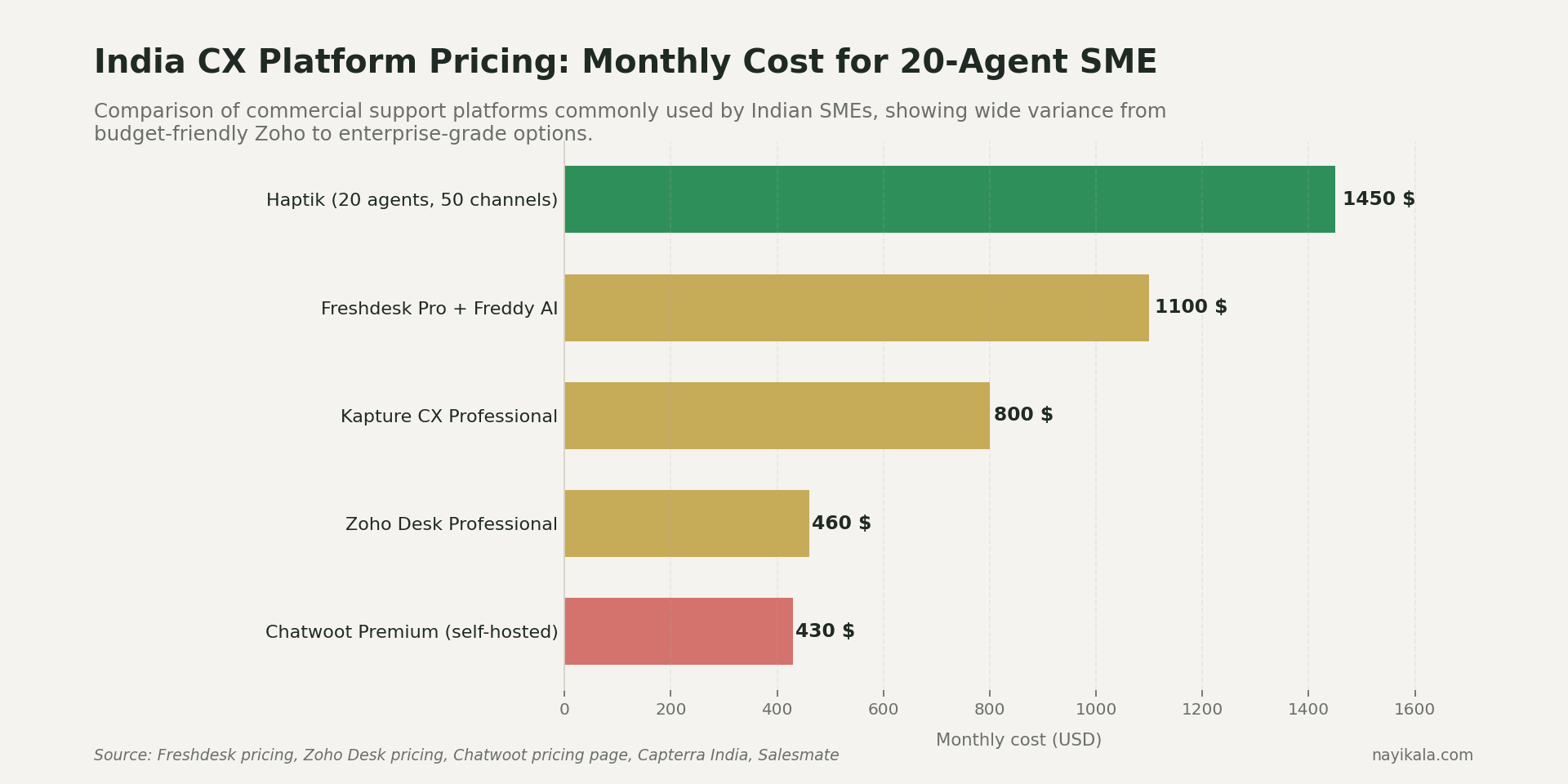
Sources: Freshdesk pricing page, Zoho Desk pricing, Chatwoot self-hosted plans, Salesmate Haptik vs Yellow.ai comparison.
The LLM you bolt onto that stack is the bigger decision. Per Skywork and Artificial Analysis benchmarks for routing-shaped workloads (~300 input + 50 output tokens):
| Model | Cost per 1,000 tickets | Notes |
|---|---|---|
| Gemini 2.0 Flash | ~$0.05 | Cheapest; 2.0 deprecates June 1, 2026 — plan migration to 2.5 Flash |
| GPT-4o mini | ~$0.075 | Lowest raw token cost; weaker on Indic |
| Claude Haiku 4.5 | ~$0.55 | Anthropic's recommended for routing; 95%+ classification consistency |
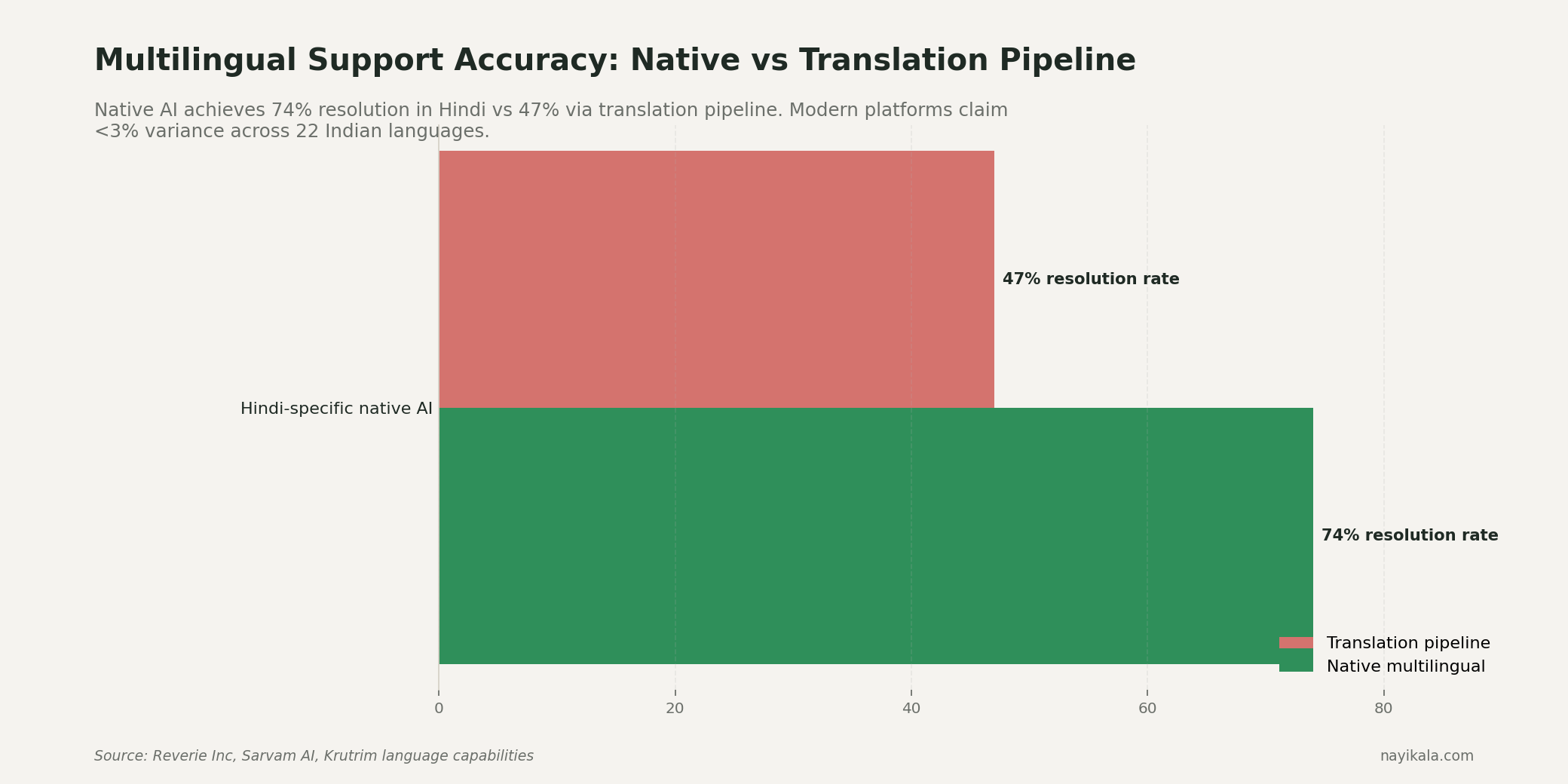
The number that should make every Indian D2C brand stop is from Reverie's analysis: Sarvam AI's native Hindi pipeline resolves 74% of Hindi tickets versus 47% for translation-pipeline approaches (English LLM with a translation layer). That's a 27-point gap. Sarvam is also 20-30% cheaper TCO than OpenAI Whisper + GPT-4o for Indian-language tasks per Rest of World's reporting. If your tickets are in Hindi, Tamil, or Marathi, you are paying more to resolve fewer cases by using a US foundation model.
The Six Routing Primitives the System Actually Needs
The deployments we've audited stop at primitive one and call it done. Here is what a defensible routing layer has, end to end:
- Intent classifier with audit-trail XML reasoning tags. Per Anthropic's ticket routing guide, the prompt returns
<reasoning>and<intent>tags so the LLM's logic on each classification is inspectable months later. This is the AIGEG-shaped piece. You need to be able to show, per ticket, why the model routed it where it did. - Urgency scoring (SLA-driven, not heuristic) tied to plan tier or order value.
- Language detection with a Hindi/Indic-native model in the path. Multilingual accuracy drop should be ≤5-10% vs primary language; mature Sarvam/Krutrim-based systems hit <3% variance across 22 Indian languages.
- Escalation triggers — sentiment thresholds, repeat-contact flags, customer LTV gates, regulated-sector keywords (medical, financial advice, refund disputes).
- Vector DB + similarity search over your ticket history. Per Anthropic's documented benchmark, this lifts routing accuracy on variable tickets from 71% to 93%.
- Customer LTV gating so VIP and high-value customers always reach a human inside SLA, regardless of model confidence.
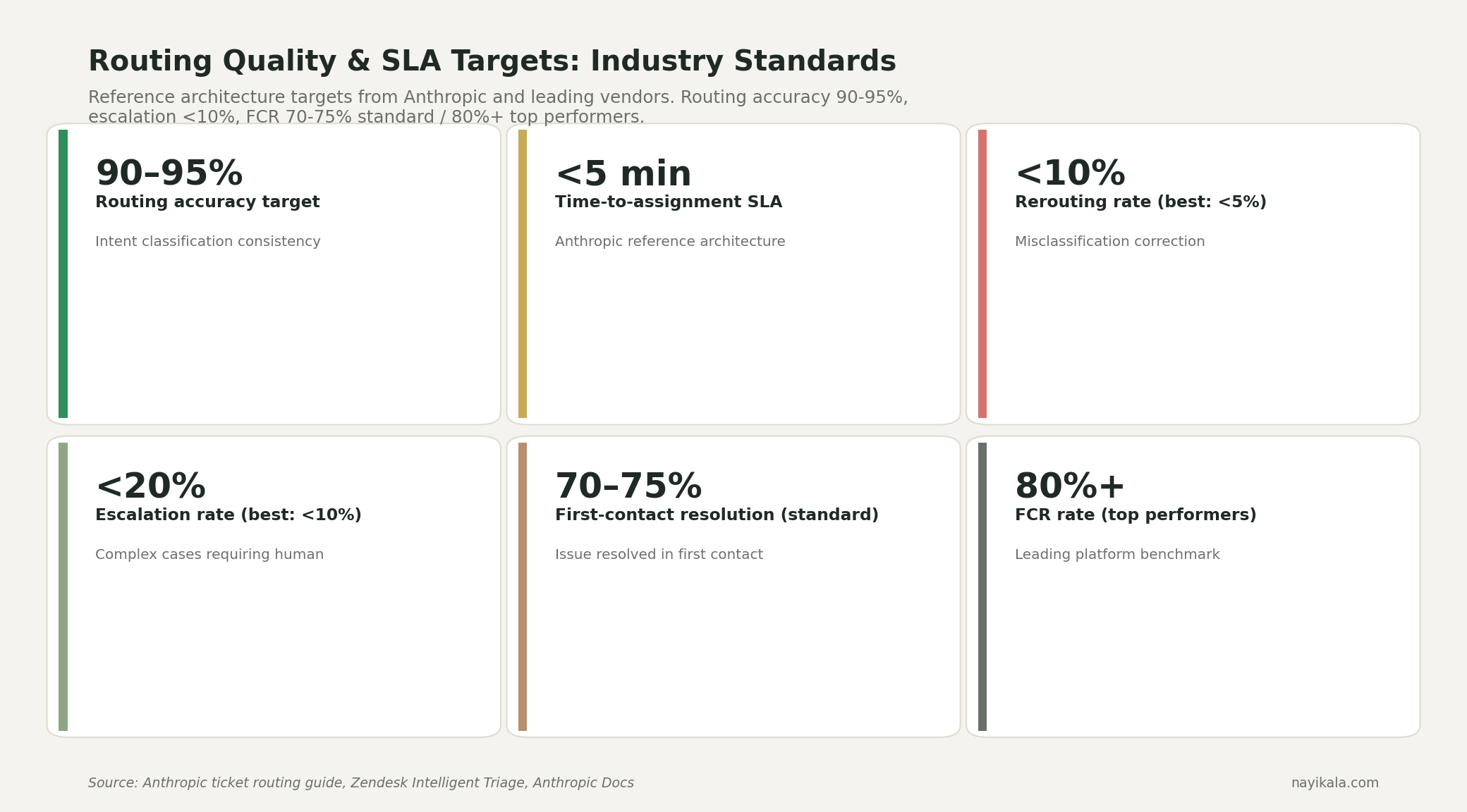
Routing accuracy target: 90-95%. Time-to-assignment: under 5 minutes. Rerouting rate under 10%. Escalation rate under 20%. These are Anthropic's documented benchmarks and they're a good MVP target.
You can build the first three on a weekend with Chatwoot, Gemini Flash, and a webhook. The last three are where the Indian SMEs we've worked with stall, and they are exactly the layer AIGEG will care about.
What You Can Do This Week Without Buying Anything
Three things, before you spend a rupee on tooling:
Tag every ticket from the last 30 days with a one-word intent. Manually. In a spreadsheet. You'll find that 60-70% of your tickets fall into 8-10 intents. That distribution is your routing taxonomy. If you skip this step and let the LLM "figure it out," you'll spend three months tuning prompts to learn what an afternoon of tagging would have told you.
Measure first response time and first-contact resolution per channel — WhatsApp, email, Instagram DM, web chat. Per Freshworks' 2024 Benchmark Report (17,170 businesses, 37M conversations), small-business FRT improvements with automation average 41.56% and resolution time 36.39%. You can't claim that lift if you don't have a baseline.
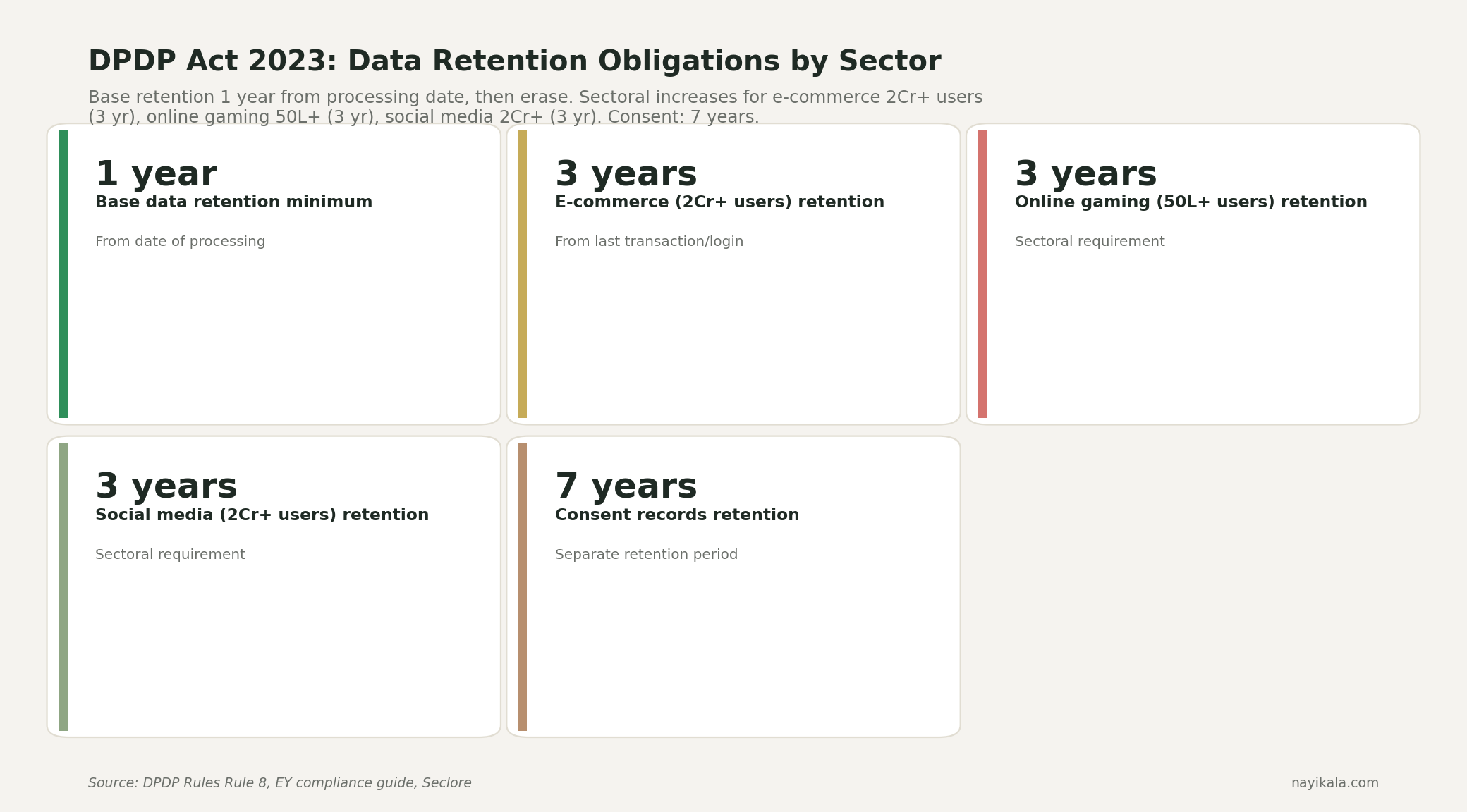
Read DPDP Rule 8 once. Just Rule 8. Your data retention obligation is 1 year minimum from date of processing for general data, 3 years from last transaction if you're an e-commerce platform with 2 Cr+ users, and 7 years for consent records. Your AI vendor — OpenAI through Yellow.ai, Freddy through Freshworks, Sarvam directly — is your Data Processor and is bound by the same erasure timeline. If they can't show you their deletion logs, that's your liability, not theirs.
Where It Gets Harder
Three layers the SMEs we've audited consistently underestimate.
The audit trail isn't a log file. It's a queryable record of, per ticket: which model classified it, what confidence score, what reasoning tags, which human (if any) reviewed it, what escalation path fired, what data left India, and when it was deleted. Building that means a routing layer with structured event emission, not a chatbot vendor's dashboard. The Anthropic-recommended XML-tag pattern is the cheapest way in.
Cross-border + processor liability is one problem, not two. Per DPDP Rule 15, India operates a negative-list cross-border regime — currently no countries restricted, so US-hosted vendors are permitted. But Rule 8 makes you, the Data Fiduciary, liable for ensuring your processor erases data on the same timeline you do. Most SaaS contracts you sign today don't specify per-tenant erasure logs. They will need to, and Consumer Protection (E-Commerce) Rules 2020 already require complaint acknowledgement within 48 hours and resolution within 1 month — those clocks run on the AI's response too.
The Klarna failure mode is structural. They didn't lack model quality. They lacked routing logic that escalated complex CSAT-sensitive tickets before the customer disengaged. Without LTV gating, sentiment-trigger escalation, and a clean human handoff inside the same conversation thread, your deflection rate will look great in month one and your churn will catch you in month three. Per Zendesk's 2025 CX Trends report, 63% of consumers will switch providers after a single bad experience.
The hard part is not the chatbot — it is the per-ticket reasoning trail, the LTV-gated escalation, and the processor-erasure log that have to exist before AIGEG asks to see them.
Related reading
← All posts