Indian D2C brands lose Rs 180-300 on every returned COD order — and most of that loss is preventable before the package ever ships. The fix isn’t a better courier; it’s what happens in the first five minutes after checkout.
The Order That Costs You Twice
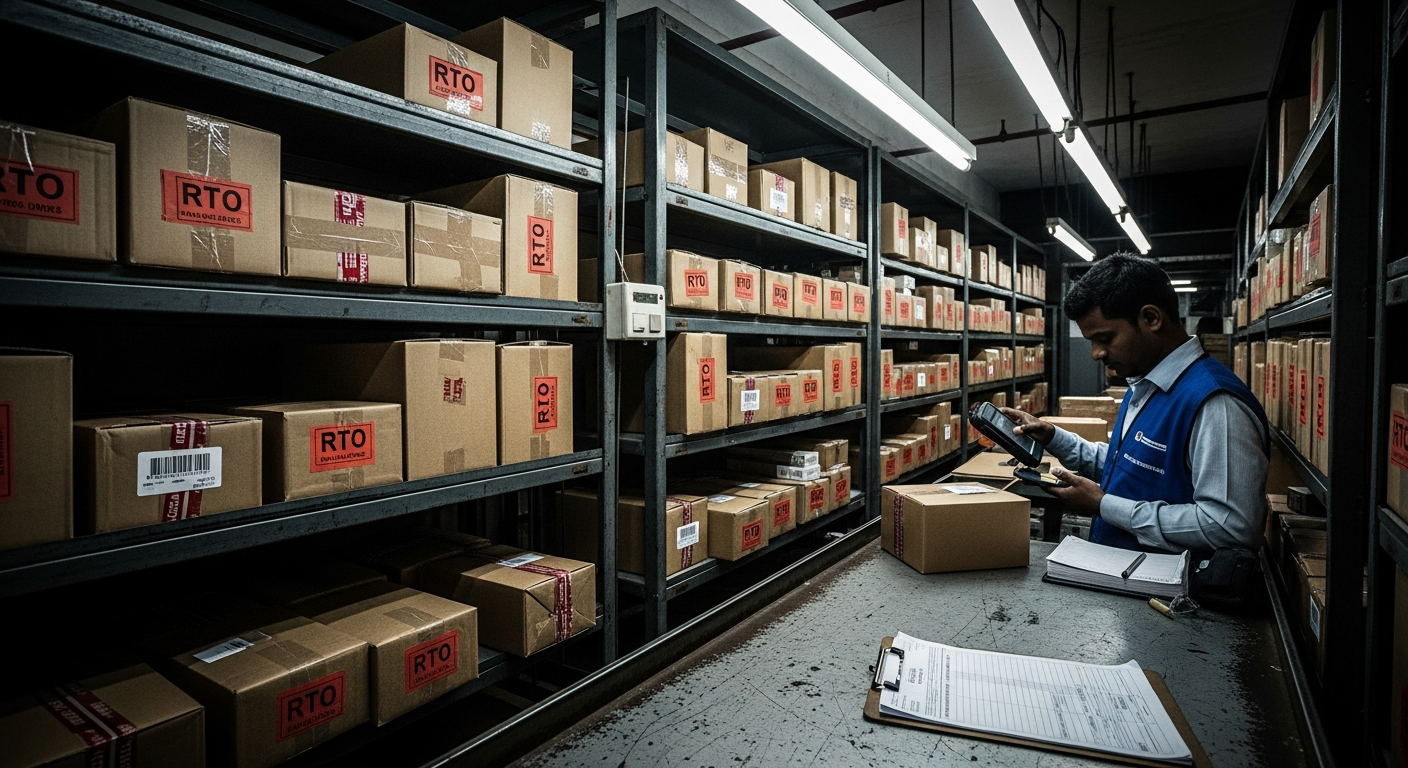
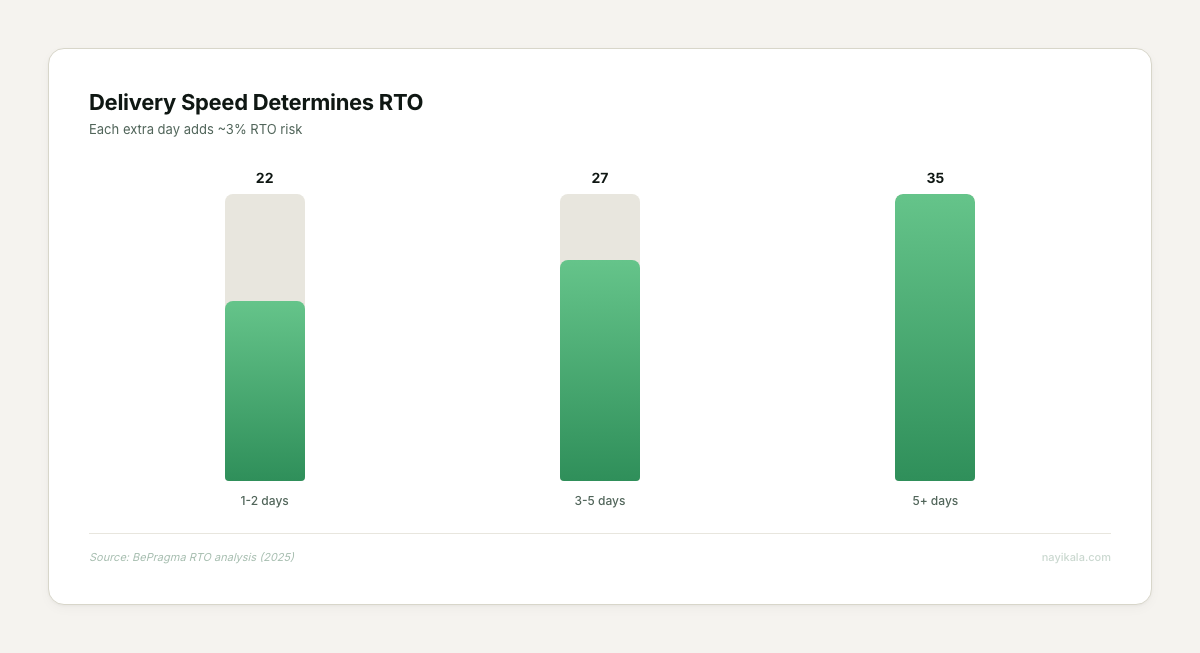
A customer in Patna places a COD order for a kurta at 11 PM on a Thursday. Your Shopify store pings the warehouse. The item gets picked, packed, labeled. A courier partner picks it up Friday morning. It travels 1,200 km over four days. The delivery agent calls twice — no answer. Tries the address — it says "near SBI ATM," which describes fourteen locations in that pin code. After three attempts, the package enters reverse logistics. It arrives back at your warehouse eleven days later, slightly scuffed.
You paid Rs 95 for forward shipping. Rs 110 for the return. Rs 28 COD handling. Rs 40 for repackaging and inspection. Your team spent 20 minutes on support tickets. Total cost: somewhere north of Rs 270. Revenue from this order: zero.
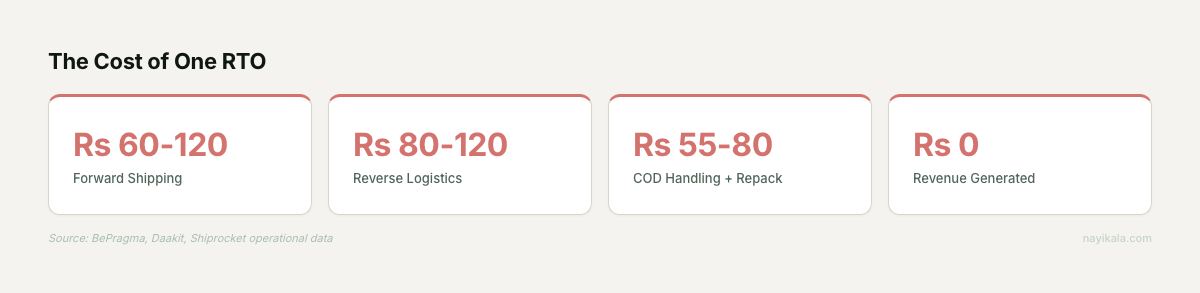
Now multiply that by 3,000 orders a month. That is Rs 7-8 lakh walking out the door every month, silently, in a line item most brands bury inside "logistics costs."
This is the RTO problem. And the reason it persists is not that Indian logistics is broken — it is that the intervention window closes before most brands even notice the order existed.
The Numbers Are Worse Than You Think
26% of all COD orders in India are returned to origin — that is the platform-level median across millions of D2C shipments, per Shipway’s ShipNotes analysis (July 2025). GoKwik’s operational data across 1,000+ brands puts the range at 20-40%, depending on category and geography.
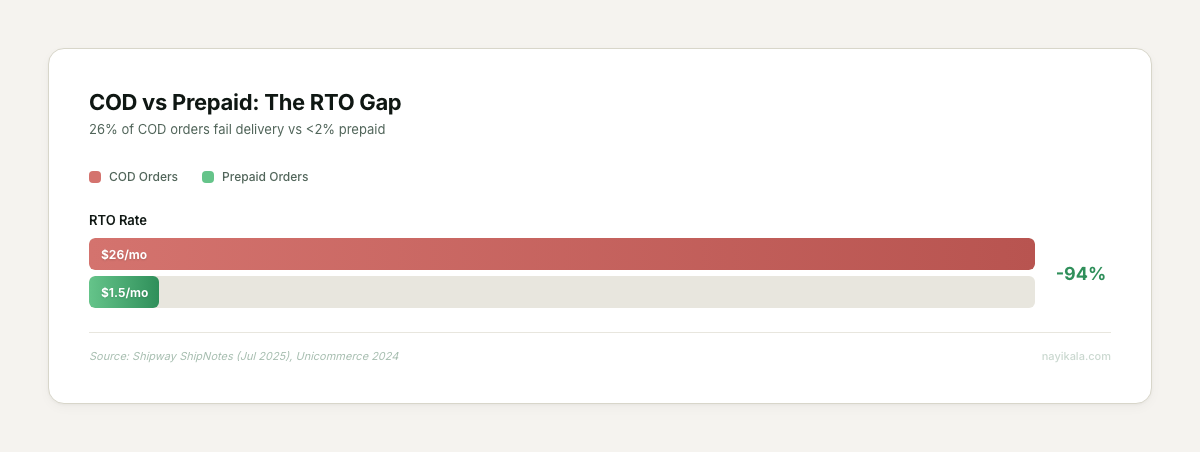
Fashion and apparel sit at the ugly end: 25-40% RTO rates, driven primarily by size and fit issues that account for 41-48% of fashion returns, per GoKwik’s category breakdown. The social commerce sellers we have onboarded — the ones selling through Instagram and WhatsApp — consistently land at 35-40%.
The geographic spread matters more than most brands realize. Intra-city orders RTO at about 20%. Ship to a Tier-3 town in Bihar, and you are looking at 32% RTO with Rs 95 forward shipping instead of Rs 65. The economics invert completely.
Meesho’s IPO filing (DRHP, late 2025) disclosed this in black and white to SEBI: 76.95% of their shipped orders are COD, and only 75.55% of those COD orders successfully deliver. One in four COD orders fails. At 2 billion annual orders, that is a staggering volume of packages traveling to nowhere.
Here is the part that stings: a single COD RTO eliminates the margin from 5-7 profitable prepaid orders. A brand doing 10,000 monthly COD orders at 30% RTO is burning roughly Rs 84 lakh a year — not on marketing, not on inventory, just on shipping products that come back.
And the working capital hit compounds it. A prepaid order gives you cash five days before fulfillment. A COD order locks your capital for 14+ days while you wait for courier remittance. When that order RTOs, you have financed a round trip for someone else’s indecision.
What You Can Do Monday Morning
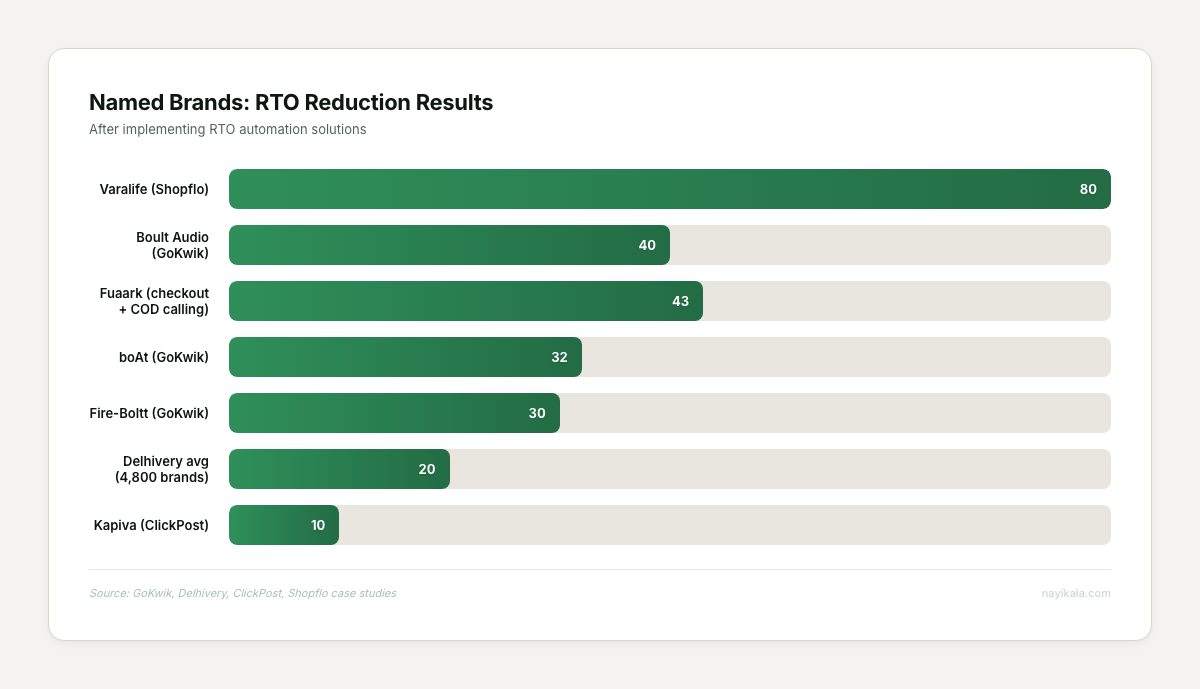
Before you sign up for any platform or talk to any vendor, there are things you can fix this week with zero spend.
Track Your Actual RTO Rate by Channel and Pin Code
Most brands we have worked with know their aggregate RTO number. Almost none know it by pin code cluster. Export your last 90 days of orders. Map every RTO against the destination pin code and payment method. You will find that 60-70% of your RTOs come from fewer than 15% of your pin codes.
That list is your immediate action item. For those pin codes, you have three options: disable COD, add a small COD convenience fee (Rs 50-100 increases prepaid adoption by roughly 15%), or require order confirmation before dispatch.
Send a WhatsApp Confirmation Within Five Minutes
This is the single highest-ROI automation in Indian e-commerce and you can start it manually.
When a COD order comes in, message the customer on WhatsApp: "Hi [name], confirming your order of [item] for Rs [amount]. Reply YES to confirm or NO to cancel." WhatsApp messages get read within 3-5 minutes at 85-98% rates — SMS sits at 12%. If someone replies NO or does not reply within a few hours, you just saved Rs 200-300 in logistics costs.
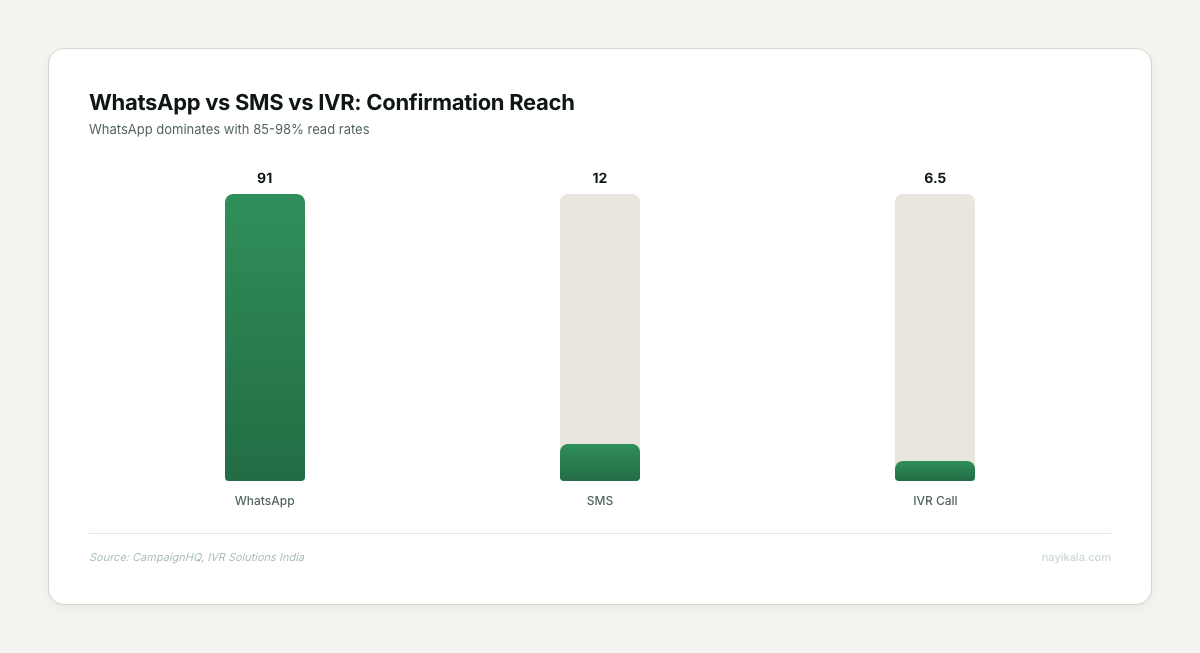
The API cost for a three-message WhatsApp confirmation flow is Rs 1.50-3 per order, based on Meta’s published Business API pricing for India as of early 2026. The cost of one RTO is Rs 205-315. That is a 60-100x return on each prevented RTO.
The timing matters enormously. In the flows we have deployed, messages sent within 30 minutes of order placement get 76-82% response rates. After six hours, that drops to 38-47%. The confirmation window is small and it closes fast.
Offer a Prepaid Nudge in the Confirmation
In your confirmation message, include a prepaid conversion offer: "Pay now and get Rs 75 off." The brands we have seen do this convert 8-12% of COD customers to prepaid — and 64-71% of those customers stay prepaid on future orders. That is not a one-time save; it is a permanent shift in your payment mix.
One detail from the flows we have built: absolute discounts ("Rs 75 off") convert at 31-38%, while percentage discounts ("10% off") convert at 18-23%. The psychology is different when the number is concrete.
Validate Addresses at Checkout
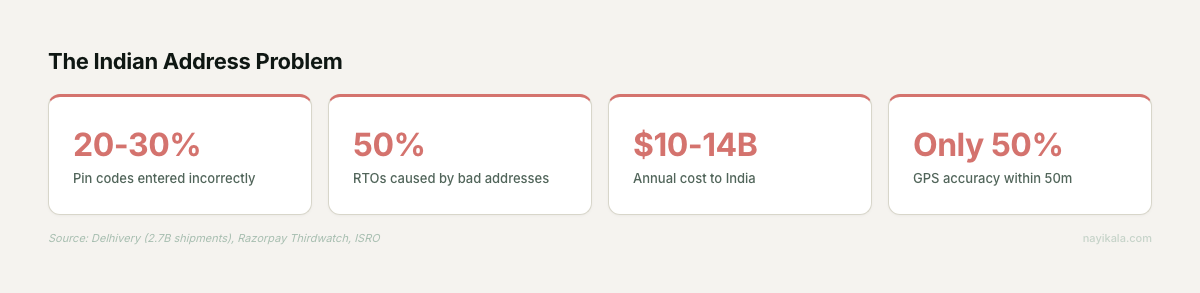
Add pin code validation to your checkout. If someone enters a pin code that does not match their city or state, flag it immediately. Indian pin codes average 179 sq km and can contain up to a million households — a valid pin code provides almost no delivery precision. But an invalid pin code guarantees a failed delivery.
50% of COD RTOs trace back to bad addresses, per Shadowfax and Shiprocket operational reports published in 2025. Requiring a landmark and cross-checking city-pin code alignment catches the worst offenders before they ship.
Where It Gets Harder
Everything above is manual or semi-manual. It works at 200 orders a day. It breaks at 2,000.
The structural version of RTO prevention is a five-stage pipeline that fires within 500 milliseconds of order creation. The Shopify webhook hits your system, and three parallel scoring calls run simultaneously: address intelligence (parsing, normalizing, validating against geographic reference data), customer risk (phone and email lookup against behavioral networks), and pin code risk (historical delivery failure probability at that specific destination).
The scoring output routes the order into action buckets — low risk ships immediately, medium risk gets WhatsApp confirmation, high risk gets a prepaid conversion nudge or OTP verification, confirmed fraud gets cancelled. This is where the design decisions live, because the thresholds between those buckets determine your conversion-versus-RTO tradeoff. Set them too aggressive and you block legitimate customers. Too lenient and you are back to shipping packages to nowhere.
Then there is courier selection. Pin code-level courier performance data is proprietary — it is every aggregator’s core competitive moat. No public dataset exists. But the variance is real: Blue Dart has the lowest RTO in metros but weak Tier-3 reach; Delhivery covers 18,600+ pin codes but has higher return rates in certain zones. The routing logic that picks the right courier for the right pin code, factoring in that carrier’s historical first-attempt success rate at that specific destination, is a non-trivial data problem.
And the NDR loop — what happens when a delivery attempt fails — is where most brands hemorrhage orders. Without automation, the non-delivery report sits as a next-morning batch. The courier tried at 2 PM, the brand finds out at 10 AM the next day, and by then the customer has lost interest or forgotten the order. Automated NDR handling fires a WhatsApp message within minutes of the failed attempt, an IVR call at the four-hour mark, and a human agent at eight hours. The difference between same-hour and next-day intervention on a failed delivery is the difference between a re-attempt that succeeds and a package that RTOs.
The false positive problem compounds everything. No RTO prediction vendor publishes precision-recall curves. When Delhivery claims "up to 20% fewer returns," that is an outcome metric, not a model accuracy metric. How many legitimate orders did the model flag and delay? That number is never disclosed. The brands we have built these systems for care as much about false positives — good customers getting friction — as they do about catching bad ones.
The real design problem is not whether to score orders — it is the threshold calibration between risk buckets, the courier routing logic per pin code, and the NDR intervention timing that determines whether your pipeline catches RTOs or just adds latency to legitimate orders.
← All posts